
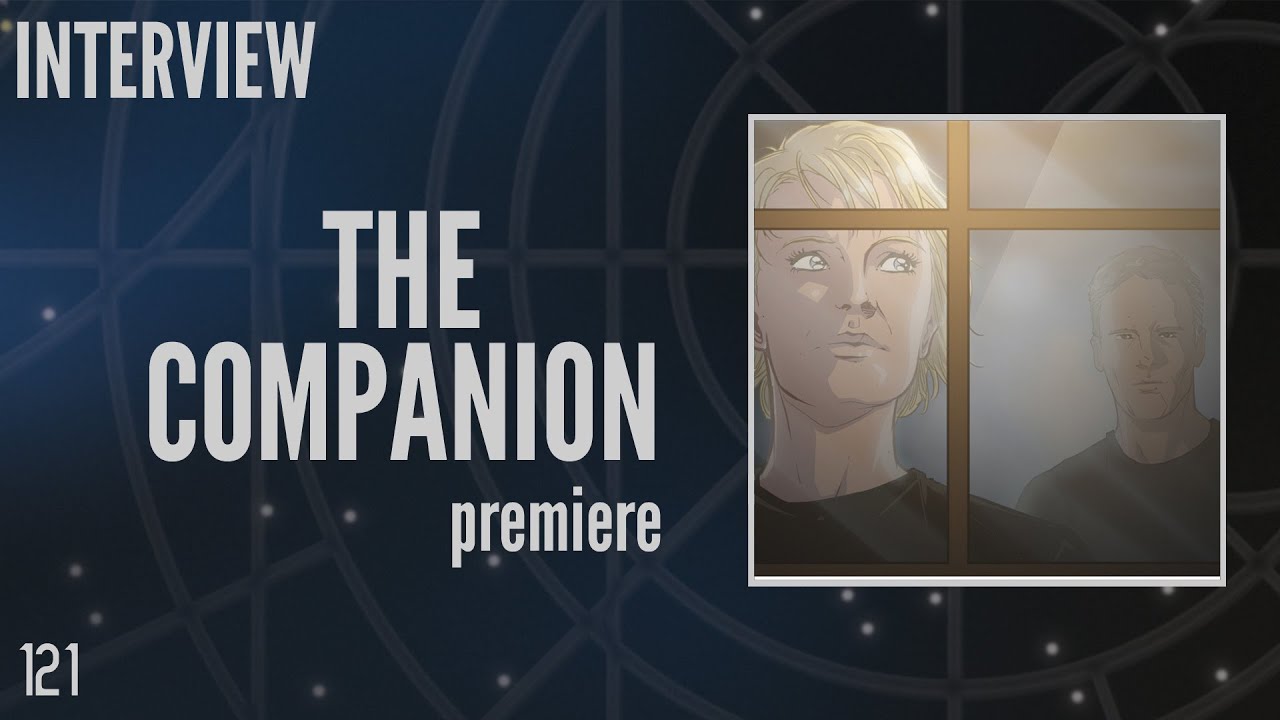
The Companion Web Site
Description
There aren't many places these days to find new, original Stargate content. One of these places is The Companion, an online resource billed as "The place fans go after the show." The Co-founder and CEO, Lawrence Kao, joins Dial the Gate for this special episode to share his designs on the site, plans for the future, and some very special clips featuring Stargate cast members like Richard Dean Anderson, Amanda Tapping, David Hewlett, Jewel Staite and much more!
Share This Video ► https://youtu.be/i4iWMtyZA74 (opens in a new tab)
Visit The Companion ► https://bit.ly/3MgDJdN (opens in a new tab)
Visit DialtheGate ► http://www.dialthegate.com (opens in a new tab)
on Facebook ► https://www.facebook.com/dialthegate (opens in a new tab)
on Instagram ► https://instagram.com/dialthegateshow (opens in a new tab)
on Twitter ► https://twitter.com/dial_the_gate (opens in a new tab)
MERCHANDISE!
http://www.dialthegate.com/merch (opens in a new tab)
SUBSCRIBE!
https://youtube.com/dialthegate/ (opens in a new tab)
Timecodes
Chapters
Transcript 11,605 words · Archived by Susan Gardiner
David Read: Hello, everyone, and welcome to Dial the Gate. My name is David Read. Thanks so much for tuning in. It means a lot to have you with us. We have Lawrence Kao, the CEO and Co-Founder of The Companion joining us for this episode to talk about what The Companion is doing, who they are, what they’re offering the Stargate community, and what’s coming up. But before we begin, if you like Stargate, and you want to see more content like this on YouTube, it would mean a great deal if you click that Like button, it really makes a difference with YouTube’s algorithm and will definitely help the show grow its audience. Please also consider sharing this video with a Stargate friend and if you want to get notified about future episodes, click the Subscribe icon, giving the Bell icon a click will notify you the moment a new video drops and you’ll get my notifications of any last minute guest changes and clips from this live stream will be released over the stream, rather will be released over the course of the next few days on the GateWorld.net YouTube channel as well as clips that follow in this episode will also be released individually on the the Dial the Gate app as, the Dial the Gate app, the Dial the Gate YouTube channel as well. With this episode is a pre-recorded show. So part of it is a conversation between myself and Lawrence Kao of The Companion. And then there are clips from The Companion, interstitialed in, from various videos that they have produced over the past year for The Companion that is Stargate content, the Stargate AI, interviews with Amanda Tapping and Richard Dean Anderson, various specials that they’ve had with Michael Shanks and with Jewel Staite. And those are going to be featured here as well. Weaving through an interview with Lawrence, and what they have been working on. So no questions will be taken by the mods in this episode, because this is all a pre-recorded show. So there’s going to be a lot in this episode for new people who have never even heard of The Companion before. And those who are already subscribers will have a lot to enjoy as well. So let me go ahead and bring in Lawrence, and we will share some clips from The Companion throughout the episode. Enjoy. I am pleased to welcome Lawrence Kao, the CEO and Co-Founder of The Companion, friend of mine going back to the Stargate Command days. How are you buddy?
Lawrence Kao: It is a reunion
David Read: It is.
Lawrence Kao: Yeah, this isn’t a first time, this is a reunion.
David Read: How are you doing?
Lawrence Kao: I’m doing great, doing great, running around, backstage, getting things always in order, but, yeah, great in general.
David Read: And you have been busy. Did you foresee the companion becoming what it has, when you and I last talked about this idea?
Lawrence Kao: Well, maybe yes and no. And I say that not from like a arrogant standpoint. But you know, just as much as I do, like what we had hoped Stargate Command like could, would, should potentially could be. And so am I surprised? And am I pleasantly surprised. Yeah, absolutely. But at the same time, I think we were trying to achieve, some of those things that I think we all wanted to do on that team of bringing the videos, the podcasts, the events, the articles, the discussions and cover topics that, really make Stargate that truly human kind of story. And so I’m really excited. I’m really nervous all the time. Because I want to make sure we’re really living up to those values. So yeah, like, both, I guess is the way I could say it.
David Read: So for my audience who has never heard of you guys before, who are you and what do you offer?
Lawrence Kao: We are a subscription membership site. We do cover a lot of Stargate, but we also cover other things like Star Trek, Marvel, it’s really about looking at some of those platforms out there that often times are funded or run by studios, and we thought, you know what, if there’s a way where we can kind of bring it all together, that’d be great. So yeah, we have lots of really fun events, podcasts, articles. And the way I almost think about it is we’re trying to do like a masterclass for sci fi or like a TED Talk for sci fi, and you can kind of see that with some of the different themes that we’ve done with the different content that we’ve had.
David Read: Okay, so what does your success look like when you when you put this all together? What is it? What is it that you guys are achieving and what’s coming up?
Lawrence Kao: Well, we love whenever there’s a lot of conversation, but most importantly, and we we are very surprised whenever it happens, our members will sometimes email us or message us with tears of joy or tears of sorrow, because of some of the highlights and tragedies like within the Stargate story as an example, and we love we’re able to evoke that kind of emotion. You know we’ve had an exciting event previously, like Stargate AI, if you’re not familiar with it, or if people here aren’t familiar with it. It was really just a cast reunion format. It was happening in the pandemic, and everyone was trying to do table reads and cast reunions. And we thought, hey, it’d be great to do something like that with Stargate. But could we do something maybe a little bit different. And Brad, Brad Wright, the co-creator of Stargate, he also created Travelers. He’s like Travelers is all around AI. Effectively I don’t want to ruin it for anyone. And where is AI technology these days? Do you know anyone who is kind of leading edge, bleeding edge to doing that. And we went to Twitter and Laurence Moroney, who follows Brad, and he’s like, “Look, I want to be a part of this project.” He is the lead Advocate at Google AI. And so he helped us build that. And then, and yeah, that became a cast reunion, but effectively an innovative cast reunion. We had another event with Amanda Tapping. And again, do we do a Stargate kind of theme. And instead, maybe it should be something around her career like Uplifting Women in Film and Television and opening the door for future generations. Or Deborah Pratt, she was the first ever black woman showrunner in Hollywood, but couldn’t really be credited for that, for creating Quantum Leap, because of the time. And so again, that interview was also very powerful. So that’s why I like to think of it as a masterclass for sci fi, or TED Talk for sci fi, and I tee all that up, because David, you are writing for us. And you are going to be creating something really amazing that I am looking forward to as well. So David is having his own series, tentatively kind of called The Stargate Philosophy or Stargate Philosophy, where he’s really going to go in deep and I purposely have not read the drafts, the early drafts, because I do want to actually experience the whole thing. And that’s what we stand for, like, we want to build these platforms, to allow people to be able to share their opinions, their expertise, their analysis, that you probably wouldn’t ordinarily get anywhere else. So that’s the idea.
David Read: That’s legit. Yeah, you guys are, I am regularly blown away at the stuff that you have been able to achieve through everything that we’ve been going through, all of us collectively, in the past couple of years here and the drive and determination that you continue to put forward in getting this content available to people. So it’s no easy task launching a multimedia platform under normal conditions, and let alone when we’re all kind of locked away in boxes.
Lawrence Kao: Oh, yeah.
David Read: It’s an achievement that you guys should be continually patting yourselves on the back with one hand and then steering forward, the truck with the other hand, with the gas pedal fully down. So good deal.
Lawrence Kao: I really appreciate it. And like, I think it really comes, I mean, it’s a lot coming from you as well. Like, Dial the Gate is amazing. Every single week, we have amazing guests. So I empathize with you as well, in terms of coordinating guests and schedules change and people all of a sudden get jobs, the whole production side of things. And one of the other things I wanted to really just bring up is, I think Dial the Gate is great and but your job an interviewer and I totally understand how challenging it is. You’re really trying to highlight everyone else, right? That’s on it, Paul McGillion, Joe Mallozzi, et cetera, all of your guests and you want them to share their stories. And it was one of those things where it’s like, you know what, I think David has a lot to offer. I think David’s got a lot of, well he just knows so much around the historical and cultural impact that Stargate has had. But if he’s started talking about at Dial the Gate, that’d be terrible in a certain way, because people are there to see…
David Read: Not here the actors, the crew.
Lawrence Kao: Right, right. And so maybe we can be that platform. And so I think that’s kind of how we’re different as well. We encourage people to go, “Hey, like, oh, can we write an article around Stargate? Or can we talk about Stargate?” Said, “Yes.” But you’re probably a lot more than that. What else can you do? What kind of new angle? What kind of thing have you always wanted to talk about? But actually, you don’t have a natural platform to do that. And so, I really hope this column, The Stargate Philosophy, that you’re writing is really going to do that.
David Read: Well, I am hoping that is the case, being fortunate enough to work tangentially, it’s somewhere the satellites around this franchise since I was 18 years old. I’m 38 now, as Brad can attest to you, he knew me when I was just an absolute young fool, just saying and opening my mouth and saying anything. “Oh, because this sounds like a good idea.” At this point, I I’ve always loved what the show is, when you pop it open under the hood, and you look beneath the entertainment. It’s not always the same as what the writer maybe necessarily saw. That I can attest to talking with Rob Cooper and saying, “I really saw this from it.” He’s like, “That’s not what I was going for. But I’m glad you get that. That’s fine. That works, too.” And so that’s what I’m looking forward to contributing with you guys. And we started off with a heavy hitting episode that Brad penned called The Other Side, which has multiple layers to it. And is when you walk away from it, I’m hoping to leave some people uncomfortable. Hopefully all of us uncomfortable in one way or another and make us think this isn’t necessarily happening on another planet. Some of this stuff is actually happening here.
Lawrence Kao: I mean, that’s okay. Right. That’s one of the articles previously that we never really got to write on Stargate Command was around the Stargate teams. They’re the good guys, we root for them. But it wasn’t like everything they did was good. If you were Wraith and you thought the Wraiths were the heroes it’s like, “Hey, what are you doing to Michael?
David Read: Right, exactly what’s going on there? Where is the line?
Lawrence Kao: Right, right. And so, no, I’m glad because that I think, I hope, all of the creators of Stargate or sci fi in general, that’s the point of sci fi, right? It literally is a reflection on society. But it’s hopefully an easier way to be able to discuss it because, sometimes politics or identity, or any of the other issues that we go through is really tough to talk about. It’s a little bit easier if you can kind of project that into a world kind of like our own, or based off of our own, but kind of do it through story.
David Read: The Stargate AI project. I think we’re gonna see a clip of that in just a few moments here. Am I correct about that?
Lawrence Kao: Yeah, yeah, definitely.
David Read: What were you hoping to get out of this experiment?
Lawrence Kao: Thank you. Yeah.
David Read: And what did you just not achieve, frankly? But what did you walk away with going, “Wow, I didn’t expect that to happen.”
Lawrence Kao: Yeah, I mean, no, I personally, did not have any view for what this could become other than I like doing things that people haven’t done before. I like it when I come up with an idea or I work on an idea. And it’s like, “Oh, this is probably going to fail, or there’s a high chance it could fail, or this could be really terrible.” It’s like, “Great,” that’s like, I guess that’s what an entrepreneur does. It’s like we can see a possible 3% chance that this could happen. And if this happens, it could be amazing. And, you know what, if it doesn’t happen, you pick yourself back up, and you pick another 3% project out there. And so, what I was really hoping for, I knew we weren’t going to be anywhere close to a world where, you’re gonna replace screenwriters with robots, or with AI bots. That’s really not how computer science and AI technology works. So that’s kind of that kind of answer to that side. And then what was an unexpected thing is what I didn’t realize was how almost like amazing of a new format we’ve created. And because I knew the actors are going to be really great. But because they put in so much passion and themselves into the performance, it became like almost are kind of like a carpool karaoke. If that makes sense. It was like, “Ah, It’s Daniel. But not Daniel but Daniel.” It was like he was speaking a foreign language, it was so magical. And oh, wow, it is Sam. But like in a really, really fun time, and in a situation that you wouldn’t normally see them in. And so that was really fascinating. And I think Michael and Jewel talked about it. They had never been in the scene together, they have never acted together.
David Read: Correct.
Lawrence Kao: But the AI kind of knew enough to be able to create something semi-coherent, and put them together into a scene. And that, to me, led to the second kind of unexpected discovery of like, this is a really interesting tool. This genuinely to me could become a tool to help people overcome writer’s block. Or it could be something for fanfiction writers. It could thrown out scenarios. All it is a starting point for people. So as an example, I don’t think Teal’c and Daniel have ever been on a volcano eating ice cream. But the Stargate AI, in theory, could come up with that. That was one of the examples when we’re going through the iteration is like, “Oh, I wonder if that’s gonna happen?” And if you’re not able to actually come up with that, but the AI can, do you know what I mean? Like, it’s a very Stargate-y situation that you could see. But you might not come up with it if you’re just thinking about it. And actually the AI could just generate like, these really weird scenarios, but you know, people, yeah, I see how it’s [inaudible]
David Read: I forget who said it in the discussion, it’s only capable of doing as good as what was put into it from the beginning. Now, Stargate has ice cream scenes, but it doesn’t, as far as well, I guess it may have volcanoes scenes, just not like…
Lawrence Kao: Kinda like a Window of Opportunity thing, that’s probably what I was thinking.
David Read: Like Inferno, but can it put Daniel and Keller on the side of a volcano, à la Sam and Frodo, if that scene hasn’t existed? Is it capable of doing that?
Lawrence Kao: If you feed it in, right? So that you have to give it something interesting? Yeah, yeah. So but I mean, we thought about this. I mean Keller, could we do a scene with Keller and Kaylee from Firefly, both Jewel Staite? They can all be fed in. And actually, that’s kind of possible. I haven’t really thought it through. I don’t think Laurence has thought it through. But it’s one of those things where, sorry Laurence Moroney, we…
David Read: Moroney. Yeah.
Lawrence Kao: And but that’s kind of what I mean by the element of the fanfiction or something else. So you can start feeding it we can give it 99%, Stargate and 1% Star Trek or 99% Stargate Atlantis, and Sanctuary or something. There are possibilities that you can do with this. And I think that’s what it is, it’s like, when you go into that kind of unknown, you experiment with it, then you start to realize, oh, this is the result, you then get 100 new ideas. I think that’s really Laurence Moroney’s whole point of this project as well, which is anyone watching it if you then have an idea let us know, because the whole point of this eventually is going to be we’re gonna put it out open source and people can start playing with it. That would be really amazing. You know, this is a tool for the creative community.
David Read: There were a couple of interesting notes that David Hewlett took away and expressed when he came back, I think in his part three interview with us, is the most recent one, where he said it was kind of like for him the dialogue was in a lot of ways reading something that Baz gave him. So an infant or especially when Baz was younger, when he would write scripts, and he’s like, “This is very much like a baby is trying to figure this out.” And on the other hand the scene direction was much more straightforward. And his opinion on that was because of the limits of how it goes off in fewer random places. It’s all very straightforward. And I that’s something that I did not expect.
Lawrence Kao: Yeah, yeah. I think with actions and stage directions as well the formula, I guess, in writing is much restructured, right? Like a person is in a some kind of, well, I guess they’re in the same kind of place a person has to do something like this. So it’s actually easier to kind of, I think, coax out of it or effectively recreate, whereas conversation kind of go anywhere. And so yeah, for sure. Maybe there’s actually a stronger thing that we can be doing by limiting dialogue, but actually creating scenes and actions and story rather than just dialogue. But the dialogue piece is really interesting. And if we can get it closer and better, the system just smarter. So we’re still gonna go over that as well.
David Read: I think we have a segment to show people from this recent AI experience.
Lawrence Kao: Yeah, you don’t want to hear us talk about it. Not here.
David Read: Well, we’ve talked enough.
Marc Evan Jackson: We have a couple of things to do before we do get into the scripts themselves. But first this will happen.
Brad Wright: We have a very special guest who appeared very recently and just basically wanted to say hello.
Richard Dean Anderson: Well, hello children, [sing song] together again. Oh, except for me. Oh, and Teal’c I guess. Listen, have fun, misbehave. But don’t you know, don’t blow it for Brad on this. Or AI, whoever, whoever you don’t want to blow it for. For whom you don’t want to blow. Haven’t changed. I miss everybody… not everybody.
Brad Wright: We were struggling to get that to me all day yesterday, it was so much fun. It’s so good that he wanted to join in.
Amanda Tapping: That’s hilarious.
Marc Evan Jackson: That was absolutely delightful. And having never met Richard Dean Anderson, is precisely what I’d expect?
Brad Wright: Yes, indeed. Yes, indeed.
Amanda Tapping: Well, that’s so sweet that he did that.
Michael Shanks: Yeah, it is.
Brad Wright: It really is. It really is and very funny at the same time.
Marc Evan Jackson: Now it was brought to my attention that I was not the only person who lobbied to be a part of today. I think we have a video to show.
Amanda Tapping: Oh my god.
David Hewlett: Hello, my name is David Hewlett. I am five foot nine and three quarters. [beep] I am six foot two. [beep] Hello, my name is David Hewlett. I’m six foot two and a half. [Beep]
Baz: I don’t quite understand what you’re doing.
David Hewlett: Just a light.
Baz: Open the pod doors Hal.
David Hewlett: I’m afraid I can’t do that Dave.
Baz: What’s the problem?
David Hewlett: What’s the problem?
Baz: Yeah, it’s your line next Dad.
David Hewlett: There are more lines? I thought we just had one. That’s the only one I know. [Beep] Look away. look away. Here’s a little Blade Runner for you. Yeah, yeah,
Marc Evan Jackson: I just love that it’s a puffin as well.
David Hewlett: That’s all we had we didn’t have any other. Terminator that’s my bicycle, that’s my bicycle light. I just shined my bicycle light in my eye. Honestly, I think Marc was saying this. The true genius of this is actually my son’s off camera just deadpan delivery. Yes, Marc. Money on this.
Brad Wright: See Michael and Jewel were direct offers. They didn’t have to audition so.
David Hewlett: That’s it. Exactly. Exactly. It’s important to get in there early I find.
Marc Evan Jackson: Let’s segue to the scripts. Let’s do what we came to do and witness firsthand the evolution of an artificial intelligence learning how to write a Stargate script. This first script is called Enemy Detector. [Music interlude] Interior Atlantis corridor: Daniel and Carter look out the window at San Francisco Bay.
Michael Shanks: Look for this. We don’t know if the Russians are still out there.
Amanda Tapping: What?
Michael Shanks: Well, we have a few friends of them.
Jewel Staite: I have enough anesthetic to fight.
Marc Evan Jackson: McKay and Keller exchange looks.
Michael Shanks: If I really have to find out why we stopped.
David Hewlett: Yeah, well, it’s not showing me the alien. I mean, the agents were originally aware of any other science project.
Marc Evan Jackson: The lights go out.
Michael Shanks: Well, I think we should explain to them that Theo downloads the exact designificious.
Amanda Tapping: Well, with respect this maps to the galaxy with primeality to the eradication.
Michael Shanks: No.
David Hewlett: Huh? Come on, come on. What?
Jewel Staite: Okay, well I appreciate you telling me.
Michael Shanks: How?
Amanda Tapping: I’m sorry but we’re dealing with two beings within a small and experimental field.
Michael Shanks: We should rest.
Marc Evan Jackson: The door opens and a man enters
Jewel Staite: I think it’s a ford. How? I don’t want to penetrate the diracking.
Michael Shanks: Well I guess that was happening to them up the nack. If possible I’d like to make every effort to rescue Chaka.
David Hewlett: Huh!
Michael Shanks: No, no, no, no, no demon we got apo perspect.
David Hewlett: It’s a matter of coordinates.
Michael Shanks: I’m warpers, I’m pretty sure I can.
Amanda Tapping: We also cannot serve the way that leads to disease after the Hammond in the sample has resorcinol explodes.
Jewel Staite: I know it’s a periage.
Michael Shanks: We’ve … We’ve just found the key to the place.
Amanda Tapping: It’s like it, it’s more like a computer in the new source.
David Hewlett: No, no, no, no, no, no. You should not rocked him. Maybe he’s closing in orbit.
Michael Shanks: I don’t know, only that they’re Russian. The device has to see the Ori and all that they do.
Amanda Tapping: What is it?
Michael Shanks: I guess there’s no easy way to say this.
David Hewlett: Are you sure?
Michael Shanks: So if we blow up, they’re all out.
Marc Evan Jackson: The Stargate is now active.
Jewel Staite: What is that?
Marc Evan Jackson: The door opens in a man walks in. She looks at him, he looks at her and she looks at him.
Jewel Staite: It’s against?
Michael Shanks: Well, the only way to find out is to send a MALP. I noticed the difference. Maybe they seem to have reloaded to fly the solar system.
Marc Evan Jackson: Carter and Daniel are startled.
Amanda Tapping: Just be out of comalph.
Marc Evan Jackson: Carter and Daniel exchange looks and explosion rocks the bridge. The team is beamed away.
David Hewlett: Oh, please just I don’t like them. I mean, we could stay here.
Jewel Staite: Maybe, maybe it should come down from there. It sounds like it’s…
Marc Evan Jackson: He looks at her intently for a moment then his expression grows cold.
David Hewlett: I think I’m going to be the Daniel. Soupy dove.
Marc Evan Jackson: Carter and Daniel reappeared on screen. Daniel looks nervous while Carter is looking over some schematics.
Michael Shanks: This is Daedalus.
Amanda Tapping: Hey, Rodney, you have to give me a look at this.
David Hewlett: Oh, I can’t just take that you’re real. You know what? How come I’m not Ellen? I’m thinking it’s me.
Amanda Tapping: So do I.
Jewel Staite: It would take months to reverse, to engineer a cure. I’m not even sure it’s possible.
Michael Shanks: What? I think they’re set.
Amanda Tapping: We have no way of knowing how things could send radiation or adaptive of the up to affectation of proximity to rigigous propensity.
Marc Evan Jackson: Carter looks at Daniel who then looks around the room hopefully.
Michael Shanks: What’s going on? I don’t know. I know you don’t have to go to do this.
David Hewlett: Oh, no, no, no, no, no, I didn’t think you knew. I did not just wing rack anything but it is a look at, um, Elizabeth.
Marc Evan Jackson: The room shakes.
Jewel Staite: Is that Michael’s cruiser?
Michael Shanks: It’s here.
David Hewlett: Whoa, wow.
Marc Evan Jackson: And scene.
Brad Wright: Now, Amanda. Don’t you think it’s fabulous to hear Marc saying, “He looks at her. She looks at him. He looks at her.” I mean no, it’s hard to write that shit. Let me tell you.
David Hewlett: I feel that Marc should be there just reading stage directions even if it was the show.
Amanda Tapping: Exactly
Laurence Moroney: Yeah, I’d watch that.
David Hewlett: What part of the show?
Brad Wright: My favorite line honestly was, “We should rest.” It just…
David Hewlett: Well yeah, “I’m gonna be the Daniel.”
Brad Wright: But there’s nothing that drives the scene forward more than the line,”We should rest,” you know?
Laurence Moroney: I loved when Daniel called McKay a demon and McKay’s response was. “It’s a matter of coordinates.” I’m gonna use that.
Marc Evan Jackson: Explain to me again because I do not understand. It’s not trying to emulate alien languages. It’s simply combining English words? Like nothing you, dear viewer, just witnessed was misspoken. There was some stuff in there.
David Hewlett: It was word freaking perfect
Amanda Tapping: Oh, I forgot. I just moved and I found my jacket.
Michael Shanks: Oh my god.
David Hewlett: Oh that’s great. You know Jane, my wife Jane was at the SG-1 premiere because she was covering it for E! and she had a nasty habit of stealing the table centerpieces of anything she went to because she was there after they cleaned up. And so the other day we found, get this. Check this out.
Michael Shanks: Oh my god.
David Hewlett: They’re made out of plumbing, like plumbing things and a bit of tape on them. And they put these on, they had a little light on the top. And so Jane stole this. I thought I should give it back.
Brad Wright: Back to who?
David Hewlett: Exactly, but isn’t that wild?
Marc Evan Jackson: Stargate AI script number four Seeking Destiny. Interior jumper cockpit, Daniel and Keller in a puddle jumper over a vast glittering ocean. They exchange looks.
Jewel Staite: Okay, I know. But what do you mean by all that?
Michael Shanks: What? I think we’ve been over this. It’s important to you.
Jewel Staite: It’d be great to have company.
Michael Shanks: No.
Jewel Staite: Look, you guys are the best of the best. I’m sure if you work together, you’ll come up with something.
Michael Shanks: We think we’ve been over this, this is a completely different scenario. The word of the stones would…
Jewel Staite: Well, I’m eager to meet them too.
Michael Shanks: But we have a couple of options. Number one, we give them hope. We need to know what happened. We think we can turn it off.
Jewel Staite: All right, and then you can see them again.
Michael Shanks: I think so.
Jewel Staite: No kidding. Well, maybe we could pass the time by getting to know each other better.
Michael Shanks: What if I read? [Raucus laughter]
Marc Evan Jackson: Ouch. What an end to it.
Michael Shanks: You know what’s interesting about this is that Jewel and I have never acted together.
Jewel Staite: Never.
Michael Shanks: We’ve been friends forever. The characters never interacted at all. Not that we don’t even think that…
Michael Shanks: …hi in passing. No. So it’s interesting that this is kind of it’s not quite coherent. But there’s actually like, I don’t know if there’s something unexpected happening there. This is kind of, I find it interesting. [inaudible]
Jewel Staite: I don’t think so.
Marc Evan Jackson: It’s not coherent. But if you turned on the television, and this was already in progress, you’d be like, well, it’s just because of there’s stuff I don’t know. Like you wouldn’t guess it’s a mistake. You wouldn’t guess that it’s gibberish or what have you
Brad Wright: And I think, “What if I read,” is a great line and should belong in a future script. Especially in a flirtatious moment, whenever, you know it’s perfect.
Marc Evan Jackson: This is a treasure trove of future easter eggs for anywhere you want to plant them, isn’t it?
Brad Wright: That’s true. On my next show, if there is a next show. It’s going to be fun.
Lawrence Kao: We also have similar question from Clair Williamson and Vicki C from our Discord. And so all of the questions kind of combined. “Did Sam come back to you naturally after such a long time? And have you missed her after reading Sam again?”
Amanda Tapping: Great question. Because I was really scared about whether or not she still was in there somewhere. And then as soon as we started reading, I think as soon as I had the others to read opposite. And especially hearing Michael’s voice as Daniel, it came like flooding back. And then I realized totally how much I missed her. But yeah, I was nervous. I was really nervous that I wouldn’t find her again. And turns out she’s right here.
David Read: Well, I appreciate the clip and a chance for people, especially those who didn’t see this before, to get a chance to look at this now. Where can they see the full thing.
Lawrence Kao: You can see it on our website and our app. It’s thecompanion.app. You can see a couple of other clips as well on our YouTube channel. I appreciate that we do have a paywall. Let’s talk about that. But right now I think we’re running a free trial. So check it out. And if you really don’t like it honestly cancel. I hope it’s worth it.
David Read: Full disclosure I am a paying subscriber as well as a contributor to The Companion
Lawrence Kao: Soon, soon, soon contributor.
David Read: Yes, I regularly get comments on my end asking why isn’t this free? There is a concern there for fans who are very limited and strapped for cash these days and it’s getting worse with inflation. I don’t see it getting better anytime soon. And there is a legitimate concern from some people as to why should I pay for this entertainment. Now I have my own answer to that but I’m going to set that aside and I want to hear yours.
Lawrence Kao: Yeah, sure. I mean, look on the surface, would it be awesome if we can make it free? Would it be amazing if it was an advertising funded platform? And we’ve heard that as well. Yeah, of course, we did decide to go with the paywall. For several reasons. The real first kind of reason is, it does really do create a much purer relationship between us and the fans. Our members, I don’t know if they realize this, whatever they say, on the Discord, or on social media or in emails, they influence so much of what we do. And so if you’re watching this, and you’re a member, let us know, even if it’s in private, because you don’t want other people to see it, you have no idea how much we care about it. The second thing really is the membership dollars, because it’s instant, we’re able to directly fund new projects in Stargate or Star Trek. And soon The Expanse. And to be honest, we’re able to fund you, David, that’s literally where it’s coming from. We couldn’t do it before, then we build up some money. And now we can pay you. And we’re gonna pay the next David expert, and the next expert and the next interesting person. And hopefully a platform that allows you to go and speak about, like other topics. I’m not saying you at all, or Dial the Gate or anything else that’s ad funded. But look, we know there’s a lot of clickbait out there. Like oftentimes, you’re gonna need like, 27 things why Stargate is amazing and number eight is gonna blow your mind. Look, they’re fun. I read them sometimes. But early on in my career, in media, and I’ve been lucky to do this for 15 years, I was told and I was taught 70% of your budget should always go into marketing. That’s basically the game. And so really only 30% goes into content, content doesn’t really matter, production doesn’t matter. We flip that 80% of the money goes into the creaters, everything else obviously goes into upkeep, technology, some some advertising. And so we wanted to make basically find, hopefully, a formula and we’re still working on it, we’re still exploring, but yeah, most of your money is going into content creation or production. And so that’s why the projects are unique. I really do wish more people knew about us. I totally get a paywall hurts that. So because it’s hard to share. But that’s the kind of choice we made.
David Read: Is there? Are you keeping your option open? To some form of hybrid in the future? A la,Hulu? Or is this the way you’re going from here on out?
Lawrence Kao: Sort of, um, I don’t know if members take advantage of this enough. But if you are on the app, and you share an article on the app, it’s actually free for anyone you share it to. And I encourage you to do that. So what did we didn’t want to do, like as an example, David, we didn’t want you to write an article, and then you share it with your friends. And it was like “David it’s a paywall, I can’t read it.” Right?
David Read: Oh, I see.
Lawrence Kao: Yeah, share it with your Whatsapp group. Share it with people here on Dial the Gate. I genuinely don’t have a problem with that.
David Read: New to me, all right.
Lawrence Kao: Yeah. Yeah. And we used to even have it on the bottom of every single article like this is how you do it, this how you share. We’re just trying to signal like, this content genuinely is worth paying for. These people are worth paying for. The stories are worth paying for. But we also know, hey, not everyone can pay for it. So maybe if like one of the friends in a group can pay for it. And then like, kind of share it with everyone you’re going to split an account, like, that would be pretty dope. And like, so it literally has been built in since day one, like 1.0, like free sharing.
David Read: Did not know that.
Lawrence Kao: So hopefully, that tells you the philosophy behind what we’re doing. So, will we go into a hybrid model I’m not sure. But will there always be a sharing mechanic? Or will there always be a way to be able to try to have fans experience some part of The Companion? Absolutely. I’m really sensitive that but we actually we aren’t Hulu we don’t have 5 million, well not 5 million, like 200 million, 50 million subscribers. We’re not that kind of thing and so yeah, that’s where we’re at.
David Read: Where are you at in terms of subscribers? I don’t want specific numbers obviously that’s for your internal strategy. Are you pleased at the velocity that this is going are you hoping for a pick up in the future. Are you on track precisely? What’s your thought process on that?
Lawrence Kao: Do you want to know the official number? Because it’s not private. I’m happy to share it.
David Read: Okay.
Lawrence Kao: We have 3000 subscribers, there are 3000 amazing members out there. Yes, part of the community. So yeah, I think in some ways, I think we’re ahead. Would I love more? But yeah no, I think for us being around about a year and a half or so a year like yeah, it’s great. It’s really fantastic. I really don’t call them subscribers, they’re really members. Because there’s so much to like what we do than just content. But yeah no, we have those members. And then we do have a lot of other people come in, whether they’re on free trials, people read articles, we still have a free page for people to experience articles. We just don’t really have an editor for that from time to time. So we used to refresh our articles, quite often. Oftentimes like on Twitter and other social media places, we also post free articles as well. And so yeah, our readership is probably a lot bigger than the paid members, which makes sense. Just like with everything else.
David Read: There it is. The Companion App page right now. So it’s got a picture of Jack and Sam. This is pretty cool artwork, man.
Lawrence Kao: Yeah. And illustrated that is from the Stargate AI Carter monologue takes place in Jack’s cabin. So that’s also interesting, right. Richard Dean Anderson was not part of Stargate AI. Sadly, I hope he’s part of the next one that we do.
David Read: Okay.
Lawrence Kao: But it was a monologue. It should just be Sam Carter, and yet, all of the characters were, well not all, but a bunch of the core cast were forced, the AI forced them in. Then Jack had to have an interaction, but it was an action based interaction with Sam, so. So yeah, that’s the interesting thing about about that experiment. It’s like, this is a monologue. Why is Jack here? Why is Teal’c here? And they’re all there in the cabin.
David Read: Well, if there’s going to be a place to attempt something like this, I’m glad that it’s with you guys. You have another clip for us. Is that right?
Lawrence Kao: Yeah. Hopefully we’ll have a, you’ll enjoy this clip.
David Read: Yeah, with Richard Dean Anderson. Okay, let’s have a look. I’m excited.
Brad Wright: But my other favorite story from the beginning of Stargate, I tell this to, I don’t know if you remember this, but it’s a great Richard Dean Anderson story. Contractually your name, Richard Dean Anderson, had to be the same size as the title Stargate SG-1, in terms of the same font. Now, that’s not something you requested. Obviously, that was just something that your agents and lawyers stuck in and until and in fact, I know if that’s something you requested, because I remember you laughing your head off when I showed you the poster that couldn’t fit Richard Dean Anderson anymore. It could only fit the word Hard Dean Anders. Hard Dean Anders was all that fit and you have the same reaction you did just now. You went, “I kind of like it. Hard Dean Anders, let’s go with that.”
Richard Dean Anderson: Oh, my God. I’m just now finding out about the font size. This is…
Brad Wright: Oh, no, no, yeah, I remember you just laughed at that and said, “Don’t worry about it. Change it to whatever you need.” It was pretty funny.
Richard Dean Anderson: Make it fit.
Brad Wright: Yeah. Yeah, that was you not exercising your tremendous star power at the time. We just [inaudible], at least we can go with Hard Dean Anders, that would have been, that would have been different.
Brad Wright: I was losing the man. I know. It’s just, my talking head just won’t do it.
Richard Dean Anderson: Over two and a half hours trying to get something to work at my house. Because I live in such a lee side of a mountain right next to the ocean. Sounds idyllic, but it’s sucks for any kind of connection. So I apologize. It will probably happen again. Jesus, what did I miss?
Brad Wright: Was just talking about you and to placate the people who are here for you. And I was saying all these lovely things.
Richard Dean Anderson: Oh well, let me disconnect.
Brad Wright: No. No. Please God, no.
Richard Dean Anderson: You look lovely. Look at her face.
Brad Wright: I know. She looks exactly the same, doesn’t she?
Richard Dean Anderson: She looks better.
Brad Wright: Oh, that’s better. That’s even better thing to say.
Richard Dean Anderson: Nice setup, though. Thank you.
Amanda Tapping: It’s good.
Brad Wright: It’s really good.
Richard Dean Anderson: Look at that.
Brad Wright: Ah, yeah, it’s that rosy cheeks smile.
Richard Dean Anderson: Pinch your cheeks off. [inaudible]
Brad Wright: That’s just too far.
Richard Dean Anderson: Almost.
Richard Dean Anderson: When I’ve got this, this old man thing.
Brad Wright: Yeah.
Richard Dean Anderson: Do you have one?
Brad Wright: Waddle.
Richard Dean Anderson: The waddle?
Brad Wright: Yeah. That’s why I’m leaning forward to throw my waddle into shade.
Richard Dean Anderson: I’ll just stretch it for the rest of show.
Brad Wright: Yeah, sure.
Richard Dean Anderson: Nice forehead though.
Brad Wright: S’all I got. I got the forehead. I have hair.
Richard Dean Anderson: Yes, you do.
Brad Wright: You know, you hit 60 and you still have hair. That’s a thumbs up as far as I’m concerned.
Richard Dean Anderson: And the right 72 And then
Brad Wright: Oh, yeah,
Richard Dean Anderson: Yeah, but it’s thinning. It really is. I’m glad we’re talking about this in front of millions of people.
Brad Wright: You just pulled, you just pulled several out just now?
Richard Dean Anderson: Yeah, Oh, I got a pile here. It’s all about aging, isn’t it? Well, that’s all these young this young audience wants to hear about is an old man talking about old age.
Brad Wright: They do want to hear you. They do want to hear you.
Richard Dean Anderson: Well, I should put some pants on.
Brad Wright: You know, okay, I have to tell a story. MGM asked me to write another pilot before COVID.
Brad Wright: I did. And in that pilot, and Amanda’s read it, there’s a scene where she video calls Jack O’Neill. And you make, and Jack O’Neill makes, that put on some pants joke. It’s so funny.
Richard Dean Anderson: Oh, do it.
Richard Dean Anderson: Well, that we’re connected. I know.
Brad Wright: Sympatico. Exactly.
Richard Dean Anderson: Yeah
Brad Wright: And then he says I still have your toothbrush. I’ve only used it once.
Richard Dean Anderson: Keep ’em coming buddy.
Brad Wright: Oh, baby. Yeah. Well, no, that was before COVID. And who knows if that’ll ever see the light of day because then Amazon bought MGM.
Richard Dean Anderson: And it may go away.
Brad Wright: But who knows? Who knows? It’s really the fourth surprise if you’re…
Lawrence Kao: The fourth surprise.
Richard Dean Anderson: We can see each other right?
Christopher Judge: So Richard Dean Anderson, Ricky Dean, Rick. RDA, Mac…
Brad Wright: Oh yeah.
Richard Dean Anderson: What?
Christopher Judge: You have been referred to many things. But I digress. Oh, my question is, it is rumored that one of your favorite people to work with was this mocha slightly gold character that you seem to enjoy. Is that true?
Richard Dean Anderson: Patrick Oh,
Christopher Judge: How are yo brother? I just wanted to pop in and say hello. I miss you. And want to thank you for all the great years on set. Great years we had as fathers, as human beings. I want to thank you for all the learning from you. I really enjoyed every minute of it. I miss you, brother. And just wanted to tell you that I love yah. Hope to see you soon. Take care.
Richard Dean Anderson: Who’s that?
Amanda Tapping: His voice got even lower.
Brad Wright: His voice is lower now. Voice still…
Richard Dean Anderson: Voiceovers, right. I mean seriously.
Brad Wright: Oh, he does. Do you know? Do you remember his audition Rick? I do.
Richard Dean Anderson: Didn’t he come out and stand there?
Brad Wright: Yeah. And you said, and he was he was incredibly buff, and you said from the audience you shouted, “Dude, you could hit the gym. Don’t you care?”
Richard Dean Anderson: Don’t care? Yes. Take care of yourself.
Brad Wright: Could ya hit the gym once? You don’t obviously don’t care. It was very funny. Lightened the whole moment.
Amanda Tapping: Rick, I had never seen MacGyver and I was like so embarrassed because everyone’s MacGyver, MacGyver, MacGyver, and I’d never seen it. And I don’t know if you remember when we were shooting the pilot. All of us were staying at the Sutton Place. And there was a dinner and after dinner, you and I went for a walk and we walked like down Robson Street and along Denman. We were walking down Robson and you were like, “Well, kid, you know, this could be pretty big this show.” And I was like, and I said, “You know, do you still get recognized from MacGyver and what was that like?” And you kind of paused and we’re walking and then I swear to God like at that moment this van drove past and these guys leaned out the window went, “MacGyver!” and you’re like, “It’s like that.”
Brad Wright: Like that.
Richard Dean Anderson: I don’t remember that.
Amanda Tapping: I was like, “Holy shit. I’m with MacGyver. I don’t know what that means, but I’m with MacGyver!”
Richard Dean Anderson: He gets yelled at by buses of men.
Amanda Tapping: He gets yelled at by young man fans. It was exciting.
Brad Wright: Laurence you’re back, you got your Internet back.
Lawrence Kao: I got my Internet back. Just a surprise number six of the day. So there you go. I was kind of giving you that story of the MacGyver to set up a fan question. Both Travis R. and Alyssa L. had both asked a very similar question which is “Like if you ever found yourself in any kind of sticky situation, if you’ve ever thought to yourself, or ask yourself, what would MacGyver or what would Jack do in this situation?”
Richard Dean Anderson: Oh, in real life? Yeah.
Lawrence Kao: In real life. Yeah.
Richard Dean Anderson: No. No, it’s just if there’s any kind of situation, I, Richard, just take care of it or deal with it. I don’t think, “What would I do when I was playing MacGyver?” What would, why you know what I’m getting at? No, I don’t…
Brad Wright: You’re a person.
Richard Dean Anderson: Yeah. And, of course so as MacGyver and they were real people. Wink. But no, I don’t go through any process like that. It’s just fun to be.
Lawrence Kao: Amanda any you ever think you know?
Amanda Tapping: I often think, “What would Rick do?’ And then I’d do the opposite.
Richard Dean Anderson: Or just do.
Lawrence Kao: Cool. We get a question around, I guess around Simpsons really, so John S., Linda C., Michelle S., they all sent in questions around the Simpsons, and can you talk about your experience with The Simpsons? Rick, whether it was being on the show, The Simpsons or working with guest star Dan Castellaneta on Stargate?
Amanda Tapping: He was great.
Richard Dean Anderson: Oh, he’s so wonderful. I mean, we all met him when he did an episode of our show. And the process was real simple. I just kind of, I blatantly said, “I’m a huge fan, I just adore your work, etc.” Fawning all over him. And then he offered me a job. Finally. No, it was just he, we had lunch one day across the table from one another. He asked if I’d ever be interested in doing a Simpsons. And as I’ve said before, picked myself up off the ground, and answered in the affirmative. I kind of went crazy, respectfully crazy. So I didn’t blow it. But yeah, he just asked me, he and his wife had written a script, with MacGyver involved in it, or me involved in it. And it was just a matter of finding a weekend to go down and do it. And it was just wonderful. The process would, most people have probably seen some version of the process. But for The Simpsons, my experience anyway, they put everybody has a microphone, not locked in booths or anything. There’s one big microphone in the middle of this circle of actors and they just read the script in character. And it’s just I can imagine being a part of something like that, and just having fun, just constantly having fun. It was so cool because being in that kind of position, you know everyone that he meets, wants to hear Homer, or any one of the dozen that he does, and he eventually acquiesced without being asked. And we all just ate it up, just ate it…
Amanda Tapping: Like a little mini scene, but played all the characters that he plays and switched between them.
Richard Dean Anderson: Yeah.
Amanda Tapping: We’re all just like, “Oh my god.” It was amazing. Yeah.
Richard Dean Anderson: You realize he does that in real time during the recording. He’ll do.
Amanda Tapping: Oh, wow. That’s…
Richard Dean Anderson: A couple maybe three characters in a row. I mean, I just, that’s a life. That’s a talent.
David Read: Richard Dean, what a coup. I have only interviewed him on the deck of the Midway in San Diego.
Lawrence Kao: I mean, that sounds pretty amazing.
David Read: It was and it’s never been released. I’m hoping to release it one of these days. How was that? You know, obviously, couldn’t happen without Brad Wright. Were you surprised at any of the stories that he and Brad shared?
Lawrence Kao: Oh, yeah, of course. I mean, the best way I can describe it is, you’re almost like joining a Zoom call that you may or may not, like whether you should or shouldn’t be in. And two friends are talking and you’re like, “Whoa, I’m hearing something really interesting.” And to be honest, I’m really glad we were able to get the two together. I generally think, people just fall out of touch when life is going on, and people are making shows or someone’s in retirement, or whatever it is, you you just lose touch sometimes. And I think this is one of the surprising things, kind of like Stargate AI, but in a different way. I don’t think like, I don’t know if they would have connected normally. But luckily Brad wanted to do a podcast, and then became this easier way to force him to go and speak to his friends, I guess, if that makes sense. And so that unintended consequence is a very positive one. And I think the fans are the benefit of it. It’s the magic of being a fan, there’s two sides of it. On the one hand, you love the characters and the worlds, you want it to be real. And to be honest, oftentimes fans like should take the values of some of these heroes and these stories, because we’ll we choose to believe in them, we will become better people.
David Read: Right.
Lawrence Kao: And then on the other side, especially with myself, and my film production background and everything else. I love the practicality. I love learning about the behind the scenes, the writing process. And so yeah, I do want to know what’s going on?
David Read: How was that sausage made?
Lawrence Kao: How’s that sausage made and how do you deal with personalities and egos? And the thing that I’ve always marveled at is that Brad was I think 34, right? When he started on Stargate and created Stargate. And how do you genuinely direct and write for people that are bigger stars, older, the whole thing. How do you manage, like, upwards in that kind of way? I think it’s so fascinating. This is, in my experience, I guess, or my very brief experience, I had to jump on very quickly with Amanda once. And I had a director for Stargate AI. And when I first jumped on it was kind of weird, because not only is Amanda, a famous actress, a famous person, but she’s a director. Like she’s a great director. And I have to direct an actress and a director. And I remember there was a moment where I didn’t say anything. She’s just sort of looking at me and we’re just looking at each other. I’m like, “I have to like, step up now and tell her what to do?” And that’s kind of what I mean by sometimes it’s weird. Hopefully did a good job. I’m sure she had fun. Hopefully, she had fun.
David Read: I’m sure she had fun. Hopefully she had fun. Yeah.
Lawrence Kao: Yeah, I think she had fun. She joined as a surprise guest on Richard Dean Anderson live show. So at least she doesn’t hate us. No, but yeah, that’s the thing that is so amazing. And it’s like the kind of interesting situations. Yeah, that we find ourselves in sometimes. And it’s all been great.
David Read: And it’s those moments where you’re pinching yourself.
Lawrence Kao: Yeah. And honestly, it all happens because we’ve got members that support us and want us to keep doing this. So it’s been great.
David Read: What do you want to do next? What’s next on the horizon? Are you going to do another AI project?
Lawrence Kao: Yeah.
David Read: Any outlook, so there’s a yes there. Okay. [Inaudible]
Lawrence Kao: Yeah, Stargate AI, version two, is 100% been talked about and planned. We know the tests of the different kinds of technology approaches we’re going to be taking. Will they work out? We don’t know. But basically we want to increase the accuracy of the stories. So right now, the actions work. Right now individual dialogue kind of works. But it doesn’t really have a coherence between back and forth, or it doesn’t have it for very long. Can you create some kind of through line, that’d be really interesting. So that’s for Stargate AI. We’re going to continue a season two with Brad’s Conversations in Sci Fi. So hopefully, there will be more showrunners, more actors, we’ll bring some of the other kind of cast members back. So that’s currently being planned. And we will definitely be doing another project with Amanda. It’ll be an event. You know last time it was around Uplifting Women in Film and Television. And this time we’re just working out what are some of the other meaningful areas of interests for Amanda, that she would want to talk about? And so, that would be great. And, yeah, we’re gonna also, start to go outside of the Stargate world. I don’t want to make any promises on any other kind of franchises. I don’t know exactly what they are. But yeah, we’re looking at Star Trek, and The Expanse and some of these other kinds of franchises. See what’s possible. We had a wonderful, amazing interview early on with Lori Petty. She’s in the Orange is the New Black, and also she’s Tank Girl. And so we cover Tank Girl, and it was a really wonderful story. I mean, if you think about it, Tank Girl was supposed to be this movie that was a huge, unfortunate, like box office flop at the time, but it was supposed to launch the careers of people like Lori Petty, into kind of superstardom. And the thing I’ve taken away from that story is it did, the only problem is it kind of took 25 years sometimes, because when you go to Comic Cons, you see multigenerational moms or daughters, both dressed as Tank Girl. You have a really strong and supportive community in Tank Girl. But when we kind of covered and we kind of realized if we’re writing an article on one week on Stargate, and another week on Tank Girl, and another week on something else, Total Recall?
David Read: Right.
Lawrence Kao: It was almost like you could do anything. And so then you were doing nothing.
David Read: Right. Yeah. You’re not getting deep anywhere. Yeah. And what’s the value to someone at that point, other than, a sci fi version of USA Today?
Lawrence Kao: Yeah. Exactly.
David Read: But come on.
Lawrence Kao: So that’s some of the things that we think there are so many interesting stories. We actually have nearly 500 posts, I guess you can call it. So we probably have 200 to 300 stories on The Companion. And I don’t think most people know that. I don’t think most people can see that. I don’t even think most people know we have this amazing Lori Petty interview. In fact, she was so gracious enough to give us two interviews, because we couldn’t get the whole story on one. We had like 12 subscribers back then, you know what I mean? Like, so no one’s gonna read it. And it’s kind of buried so deep into our archive. So one of the things that we’ve been doing is giving the website and the app a bit of a facelift. So you can discover some of these classic hits. So yeah, that’s kind of the other area that is an improvement for us in terms of what’s next.
David Read: Okay, so improving the interface in such a way that people can find more of this content, and discover it. Yeah, like a random kind of article button that you can click on, or anything like that kind of [inaudible]
Lawrence Kao: It doesn’t exist, but that is a very, very good idea. Like, “WhatshouldIbereading.com.”
David Read: Yeah, no, because I wasn’t even aware of that and I’ve loved her ever since Free Willy. So that’s terrific. I’m definitely going to, after we hop off, go for that. But for those who have been watching, and want to subscribe, I wanted to point that way. So it’s the companion.app. APP correct?
Lawrence Kao: It is. Yeah, yeah. In fact before we jump off, really point anyone to anywhere I really wanted to talk about, without spoiling anything, what you’re writing. I think where are you coming from at this? Why is it so important? What is it about the series that’s so interesting? Because I’m really curious about your opinion on some of these, these different episodes, and then really the themes of each of these episodes.
David Read: I was raised on Star Trek, that is like my bread and butter is Next Generation. And I’m an only child, spent a great deal of time alone with the television, and it really, I let it in. I let the content in. And so the Prime Directive and the treatment of how you treat your neighbor in a Star Trek world really got into me deep. And it continued through Stargate. And the values that the team attempt to hold themselves up to and strive for are very much a part of me. So when they encounter something that pushes them apart, or forces them to examine their world in a way that they didn’t before I sit up and take notice. And that’s the great thing about Stargate is you can do it while washing the dishes. But you’re kind of missing out if you do that. You can watch it casually, but I wouldn’t recommend it. And so I really wanted to dig into the deeper aspects of a lot of these more specific episodes, and then go into like some of the more obvious ones like Red Sky, The Other Side, Michael, and pull them apart and see what’s underneath. And then go to some of the more not so obvious or not so fan favorite to see, okay, maybe not necessarily what were they trying to get to in this, but what did they the writers achieve, that maybe wasn’t there originally, or was and we didn’t pay that much attention to it because it wasn’t a significant episode in terms of the overall plot for that season. That’s what I really want to get to, I want to get to the nuts and bolts of some of these individual shows. And then at the end of the article, turn it around back on us and hold that mirror back at the audience and say, “How does this apply to you? How does this apply to me? How does this apply to us as a community, us as a nation, us as a people, us as a planet?” And I want to make the audience think a little bit.
Lawrence Kao: If I can sum up some of the words that you said that, I think, really mean a lot. I have a feeling what you’re going to be writing will divide some people, I think a lot of people won’t agree, fans might not agree. But I would encourage everyone to keep in mind. This is why these stories are so meaningful. And this is the reason why they matter. This is why Star Trek matters, or Stargate matters, or Star Wars matters, or anything else matters. And so I think it’s pretty cool that people will disagree. And then just please keep in mind when you’re reading it, it’s why it’s so meaningful. I think that’s really cool.
David Read: Sci Fi is at its best when it doesn’t play it safe. There are episodes of Star Trek that are out there that I don’t think would be made today. Because the prevailing winds have moved on from this level of expectation to that one. And I think it’s important for us to point out those differences and see, “Okay, why was this important then? Why is it important now? How’s it going to be important in the future?” And I think if I’m making people think, if I’m trying to get them to think about something, if I’m just getting someone to agree with me, I don’t think that’s what, I don’t think, I think I’m in it for the wrong reason. All I want to do is share a perspective and that’s all. Or multiple perspectives, and then have people think about it, and that’s it.
Lawrence Kao: Yeah, cool. And anyone who’s reading this or any other piece, just keep in mind your perspective will hopefully continue changing to any character or any story. Because it should, right? You’re getting smarter, you’re getting older, you’re getting more experiences, you’re getting better perspective on life. And so why would Stargate be the same as when you were nine, as it would be when you’re 19, as when you’re 29 and you’re 39? It should it should be evolving.
David Read: And to be fair, I want to include at this point I’ve only written one article. The perspectives that I share are not always going to be mine. I think that one of the things that makes you a well rounded person is to be able to fight vehemently from another person’s perspective. If you can’t do that then you need to be asking yourself “Okay, what what am I, the foundation’s that make up myself, what am I really based on?” You know if I can’t fight from another person’s perspective and see their perspective, what’s going on there. So, [inaudible]
Lawrence Kao: I’m looking forward to it.
David Read: Yeah. I appreciate the opportunity to be a part of this. And I appreciate you coming on. This is has been great. Well over due.
David Read: Super pumped.
David Read: Thank you. Yes. Yes, for sure. Well, hopefully everyone enjoyed the clips. Hopefully they enjoyed this conversation. And I’m pumped. Hope you’re pumped.
Lawrence Kao: Yeah.
David Read: Absolutely. Thanks so much to Lawrence Kao and his team from The Companion for making this episode possible. We really do appreciate having them on and the opportunity to share some of the Stargate content that they have released. It’s just really cool. Individual clips from the content that they have given us will roll out on the Dial the Gate channel over the next couple of weeks here so you can see those individually as well. But we wanted to premiere them in this content as we had it here. If you like what you’ve seen, please consider clicking that Like button and sharing this episode with with a Stargate friend. There’s a whole realm of Stargate viewers that don’t know about Dial the Gate yet and so we’re hoping to make that happen. Dial the Gate is brought to you every week for free and we do appreciate you watching if you want to support the show further buy yourself some of our themed swag. We’re now offering T-shirts, tank tops, sweatshirts and hoodies for all ages, as well as cups and others accessories and a variety of sizes and colors at dialthegate.com. From the merchandise tab you can click on a specific design to see what the items are being offered. And checkout is fast and easy. You can use a credit card or PayPal just visit dialthegate.com/merch or dialthegate.com and click on Merchandise. Thanks so much for your support. I can’t bring the show to you in a bubble. It takes a village and that village includes Linda Furey “Gategabber” my producer as well as my moderators, Sommer, Tracy, Keith, Jeremy, Rhys, and Antony. Big thanks to Frederick Marcoux at Concepts Web, our web developer for Dial the Gate. And also a big thanks to Jeremy Heiner, our webmaster who keeps the site up to date. James Lafazanos, the Wraith commander, actually many different Wriath commanders, is going to be joining us just in a few moments here. He has also another pre-recorded episode. Fascinating discussion with this guy, and I appreciate you watching. Thanks so much for tuning into Dial the Gate. We’ll see you on the other side.