

Robin Mossley, Actor, Multiple Roles in Stargate SG-1
Description
There are many reasons Season Four's Window of Opportunity is continuously rated the #1 Stargate episode of all-time, and none-the least of which is it's gut-wrenching climax, played to perfection by guest star Robin Mossley. In addition to "Malikai," he also returned as Dr. Reimer in Seasn Ten's "Morpheus." We are so excited to welcome the actor to Dial the Gate LIVE to answer your questions!
Share This Video ► https://youtube.com/live/lo1hgG_jhOs (opens in a new tab)
Visit DialtheGate ► http://www.dialthegate.com (opens in a new tab)
on Facebook ► https://www.facebook.com/dialthegate (opens in a new tab)
on Instagram ► https://instagram.com/dialthegateshow (opens in a new tab)
on Twitter ► https://twitter.com/dial_the_gate (opens in a new tab)
Visit Wormhole X-Tremists ► https://www.youtube.com/WormholeXTremists (opens in a new tab)
SUBSCRIBE!
https://youtube.com/dialthegate/ (opens in a new tab)
Timecodes
Chapters
Guest
-
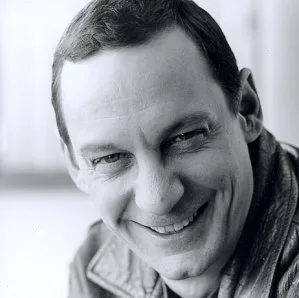
Malikai in SG-1; Dr. Reimer in SG-1
Transcript 5,563 words · Archived by Claire Brownlow
David Read: Hello everyone and welcome to episode 182 of Dial the Gate. My name is David Read. This is the Stargate oral history project. We have Robin Mossley on who played two characters in Stargate SG-1. He played Malikai in Window of Opportunity and Dr. Reimer in Morpheus. Before we bring him in, if you enjoy Stargate, and you want to see more content like this on YouTube, it’ll mean a great deal to me if you click that Like button. It makes a difference with YouTube and will help the show continue to grow. And please also consider sharing this video with a Stargate friend. And if you want to get notified about future episodes, click the Subscribe icon. And if you click the Bell icon, you’ll get notified the moment a new video drops and you’ll get my notifications of any last minute guest changes because sometimes things shift pretty quickly. And clips from this live stream will be released over the course of the next few weeks on the Dial the Gate and GateWorld.net YouTube channels. If you are in the YouTube chat, you can submit questions to Robin via the moderators and they will go ahead and turn around and get those to me. And I can ask them to him. In the meantime, I want to thank Robin Mossley for joining us for this episode. Sir, it is a real treat to have you. I’ve been looking forward to this for a while now. How are you?
Robin Mossley: I’m fine. Hi, nice to meet you.
David Read: It’s a pleasure to meet you. I’m curious to know if you are aware of the impact that your first episode, Window of Opportunity, and your guest appearance as Malikai has had on the Stargate community after all of this time. Number one — routinely number one — rated show of all of the franchise.
Robin Mossley: People have told me that it was one of the more popular ones, yeah. So I kind of knew that it was sort of like a fan favorite and that. So it’s nice. I’m glad that I’m in something that was so popular. Yeah.
David Read: Can you give me an idea of when you first knew that you wanted to act? How long did you have the acting bug? How old were you?
Robin Mossley: Oh, like grade one, maybe. Something like that.
David Read: Really? Really early on!
Robin Mossley: Yeah. Really, really early. When I was in elementary school, I was, well I guess everybody thinks they’re like an odd kid, but I was… I wasn’t like the most popular kid in elementary school. And then I found I could make people laugh. I think the first thing that happened is I got cast as the troll in Billy Goat’s Gruff, under the bridge. And, that’s also where I found out that playing villains was like a really great thing. That villains will get all the best lines and all the best laughs and all the best stuff. And so yeah, like really, really early on.
David Read: Yeah, Ok. You know, there is something to be said about playing the bad guy. Because I think that there is… I think it’d be foolish to acknowledge that there isn’t a little bit of bad in all of us every now and then or the urge to [say], “You know what, I could do this, but I really don’t… I really don’t feel like it. I’d really like to take a little bit more self interest here in this choice.” You know, do you see that, like, reflected in some of the characters that you’ve played?
Robin Mossley: Yeah, I, don’t know how many… I didn’t get to… oh, I got to play a few bad guys, I guess. Yeah. And Malikai was fun because he was, at first he starts off as sort of a good guy and but — well, he’s not really evil, he’s misguided, is what he is — but yeah, so I got to play sort of, just sort of a good scientist, technician kind of guy. And then I get to all of a sudden change and be the, you know, shoot Daniel or whatever.
David Read: Right!
Robin Mossley: Yeah, yeah. And then, and then you find out that I’m not so bad after all. So…
David Read: Exactly, over the course of that show. Is there any particular role that you had during your career that pushed you in ways that you didn’t expect? Or that you got something out of the material that you, for your own personal satisfaction, that you weren’t expecting?
Robin Mossley: Probably the most important one was — because I used to do theater as well, I alternate — and in 1989 I got cast in this play The Lion in Winter, which was… [inaudible]… what was it? Yeah. That’s just an interesting take to this day that… it was [inaudible] co-production and the designer who did the set, and costumes, ended up being my wife. And the other thing that happened on that, was when I went to do… the very first day that I was on Window of Opportunity and outside my trailer and Michael Shanks came up to me and he said, “You probably don’t remember this but when you did the Lion in Winter in Kamloops, I was one of the spear carriers.” And he was a high school kid and they would get — Western Canada, the theater in Kamloops — they were attached to a high school, they’d use students and stuff for doing tech stuff, but also for acting and that, and I was in one of Michael Shanks’s very first professional plays… or, acting jobs. Yeah. So tragically, I forgot. I’d say, “Oh, yes, Michael. Yes.” But it was really sweet of him to come up and remind me. And I think Amanda Tapping came to say “Hi”, and Richard Dean Anderson. It was a really, really lovely cast of people. And Richard Dean Anderson, I knew quite well because I was like, “Mr. MacGyver.” I did like about eight MacGyvers. And I was in a couple of his favorite episodes as well, which were the Westerns. He loves the Westerns, so I got to play sort of a challenged gunslinger on these Westerns that we did in MacGyver. I think that’s how I ended up, eventually, on Stargate is because it was the same producers. It was Michael Greenburg and Stephen Downing. I think they must have liked me because they kept casting me on MacGyver.
David Read: So did you go out to audition for Malikai or was this role offered for you?
Robin Mossley: I think I must have auditioned for it.
David Read: OK.
Robin Mossley: I was a little… because I’d done so many MacGyvers when they started the new series and stuff, I thought, “I’m in like, Flynn, you know, like I’ll-” I don’t think I even got very many auditions for the first… because I think it was season four, right, was Window of Opportunity? And so I can’t even remember auditioning it. I remember feeling a bit sad over the fact that I wasn’t being called in to audition. They ended up giving me a really, really nice role, so that made up for it. That’s when it… it’s probably… because a lot of the stuff that I did in TV and that, I didn’t… a lot of the times it was sort of, you know, Basil Exposition, you know, “There’s a form for you, Mr. Selleck.” Or a lot of doctors and stuff, but again, you know, I’d be setting up the, you know, a lot of expository stuff, you know.
David Read: Yeah, you’re moving the show forward for the other players.
Robin Mossley: Yeah. And so Window of Opportunity, Malikai was a great role, because I got to do a bunch of different stuff. And it was emotional and all that too, so.
David Read: Oh, absolutely. I want to talk a little bit about that. Peter DeLuise directed that episode to perfection.
Robin Mossley: Yeah, I love… [he’s] such a nice, such a nice guy. He must have really liked me too. Because I worked with him… he cast me a number of times in things or, you know. Because I did, Window of Opportunity was the first time I worked with him. And then that, what was it called, the… Amanda’s show, Sanctuary. And then I retired in 2011 and he directed the very last thing that… the very last show that I did was RL Stein —
David Read: The Haunting Hour.
Robin Mossley: — The Haunting Hour, yeah, yeah. And he directed that one. And I think I actually told him I was gonna retire at that point. I’d gotten really, really anxious, I wasn’t enjoying it much anymore. And I started to get really anxious. And then at that point, what’d happened, was, 2011 what happened… So right after that my father got ill, he was 89. And he went into the hospital and he’d been looking after — he was still doing all the shopping and driving and cooking and stuff — he was looking after my mom, but he lived right next door, and we didn’t, even though he lived next door, we didn’t realize how bad my mom had dementia, Alzheimer’s. And when my dad got out of the hospital, he couldn’t look after her anymore. So I started looking after both of them. And I was still auditioning and stuff. And my lovely wife, who’s got a really great career. She’s a production designer now, a senior supervising art director, on all these big shows in Vancouver and stuff. And she said, “Just look after your folks, you don’t have to act anymore.” So I quit.
David Read: Well, putting family first, you know, if we’re lucky, we get to be able to do that. And you know, believe me I understand. I understand where you’re coming from there. Can you tell me about who Malikai was on paper for you in the audition? I mean, on the surface, he appears to be just the scientist working an Ancient dig. There were some serious motivations underneath the hood there. Tell us about your impression of this wonderful character.
Robin Mossley: Well, yeah, was he was very rich, there was a lot happening. Like… I can’t remember like, if… such a long time ago, David…
David Read: I understand.
Robin Mossley: Just realizing it was a really great part, right? There’s a real art to him and, you know, lovely emotional components as well. You know, the fact that he lost his wife and you got to play that loss and that lovely scene with Richard Dean Anderson, you know? You’re always thrilled to get any kind of work and the fact that it was also going to be like, you know, five days in a guest star. I hadn’t had a… I don’t think I’d had that part that big for a little while. I’m trying to think back. I think it was like, “Oh, yeah, this is great,” because it’s like five days. And it’s just a really… it’s a really lovely, rich part with a lot of interesting things that I got to do. The hardest thing — but this is more getting on set and use — was having to deal with the whack-a-mole, was the machine…
David Read: The device!
Robin Mossley: …the time machine. Because it was all just kind of random and when I was having to interact with it, I just sort of like put my hands on it. I had to look like I knew one I was I was doing. It was shifting around all over the place, right? So you’re trying to like make sure that you’re touching something that was inactive and not like on its way up or down. And then you also had to be, you know, acting your butt off as well. So that’s the one thing that I remember, probably the only bad thing from that entire shoot, was having to deal with the whack-a-mole. Everything else was really lovely. Yeah, it was it was a great experience and a great show. So I’m glad that it ended up being so popular.
David Read: Can you hold on for five seconds?
Robin Mossley: Sure. Sure.
David Read: Don’t know if you saw…
Robin Mossley: Oh, this is… is that from… the actual… is that is from the set? No?
David Read: Yeah, it is.
Robin Mossley: Oh, okay. Wow, wow.
David Read: I figured this might ring some bells for you.
Robin Mossley: Oh, yeah. Well, it probably more for Michael [Shanks] and Richard Dean Anderson. They had to work with that a lot more than I did. That was on the other wall, that was across the whack-a-mole for me. So I didn’t actually get over there and look at that too much.
David Read: This is from the dashboard. These are the buttons.
Robin Mossley: Oh, oh!
David Read: Yeah.
Robin Mossley: Well see. It’s so long ago that I can’t recognise.
David Read: It’s all good!
Robin Mossley: Well no, now it’s coming back to me. Now it’s giving me nightmares now, “Oh yes that thing!
David Read: Oh, that’s funny. A lot of people count that scene at the end of the episode where Rick confronts you. And, you know, 14, I think, worlds are hanging in the balance, they’re about to get looped around again.
Robin Mossley: Amanda had that line. Amanda… there’s like a little bit of a progression, and it’s Amanda, who says that there’s 10 worlds or 14 worlds or something. So she says that. There’s that sort of realization that I’m kind of like, screwing over a whole, like, bunch of people. I hadn’t realized it was as bad as all that. And then it’s Rick, after that, talking about my…
David Read: Losses.
Robin Mossley: …deceased wife. Yeah, yeah.
David Read: Mutual loss, you know. I think that it’s a great scene, because — it’s a great episode — because it has all the layers of, what we as fans of this series have come to love about the franchise, which is, it’s character first. It’s comedy, and it’s drama, and it’s action, all weaved back and forth together. But at the end of the day, it’s about heart. And you know, that we can, even though we’re working across purposes against one another, we can set everything aside and say, “OK, what’s really going on? Why are you doing what you’re doing?” and truly stop and listen. And in this particular situation, his wife had a congenital heart defect. If she had died from a car crash or something, we might have been continuing on for a very long time. But they listened to one another, and that scene, that moment where he says, you know, “I could never live through the death of my son over again, could you?” And you look down and look back up with that realization, “No. No this is not possible.” and he turns the device off. It’s one of the greatest moments in the entire show. You know, it’s good stuff.
Robin Mossley: Look down and try and make it look like I know how to turn off the whack-a-mole and still convey that I’m heartbroken. Yeah, anyway.
David Read: Absolutely. Yeah, it’s good stuff. You came back for a brief appearance in season 10’s. Morpheus as Dr. Reimer. This is the episode where everyone got really sleepy.
Robin Mossley: I didn’t realize it’s the same writers.
David Read: Yes. Joe and Paul.
Robin Mossley: Yeah. Joseph Mallozzi and Paul Mullie, right?
David Read: Yep.
Robin Mossley: And they wrote both of those. Yeah, yeah. It’s not quite as popular, I don’t think with the…
David Read: Not quite.
Robin Mossley: It’s about people falling asleep and not waking up. So…
David Read: Taking lots of caffeine pills.
Robin Mossley: Oh, yeah, yeah. That was, well see I got… that was fun, too. Like, I got to have like a heart attack.
David Read: Wasn’t it fun?
Robin Mossley: Serious as a heart attack! I screwed up, I screwed up. I got too into it as an actor — because you do like the rehearsals and stuff — so we’re doing the rehearsal. And I thought, “Well, I’ll go for it so they can see what it is that’s going to happen.” You know, what I’m going to do. So like I fall on the table and knock everything off. During rehearsal, then afterwards I fall on the floor. And then all of the poor continuity people and the set dec people have to like, try and recreate what was there before like, “Oh, I shouldn’t have done that. I should have been…” I got too into it. But anyway. My big death scene. But yeah, yeah.
David Read: Right! Lockwatcher wanted to know, did you notice any, or recall any differences in production between your season four appearance and then coming back six years later to the same group of people? Or was it just fitting back into those pair of shoes again? Except that Ben Browder had replaced Richard Dean Anderson.
Robin Mossley: Yeah. Ben Browder.
David Read: And Claudia Black.
Robin Mossley: Yes, but didn’t have any scenes with her.
David Read: OK.
Robin Mossley: Again, it was a little bit similar where there’s this whole sort of comedy thing going on in half of the show that I have no part of. Because it’s the legendary Beau Bridges. I would have loved to have gotten the chance to work with. And then Claudia Black, right? They were trying to establish her, I think, as a sort of a comedic, ongoing regular, you know? So that was the whole half of the episode was that element of it. And then there’s the sleepy time on the other half of it.
David Read: While she’s taking Rorschach tests back on Earth, everyone on the planet is trying to keep their eyes open. That’s funny. I forgot about that.
Robin Mossley: With Robert Picardo, he’s a wonderful actor too. He had huge success on Deep Space Nine or…
David Read: Voyager.
Robin Mossley: Voyager. Yeah, yeah.
David Read: Yeah, absolutely. He was a gem. Teresa Mc wanted to know, what actors do you personally admire or wanted to work with or did work with that you admired?
Robin Mossley: Oh, there was lots. I got to work with Will Ferrell on Elf. And I thought Will Ferrell is going to be one of those guys that was kind of on all the time, a little bit like Robin Williams, you know. And he wasn’t at all, he was this wonderful, quiet, thoughtful guy. He would go and he would talk to — it’d be like a really interesting background performer — and you start talking to him. He’d just start talking about fishing because the guy was from up north somewhere. And they just had this lovely conversation about fishing and that. And then they roll camera and he’d…
David Read: Turns it off.
Robin Mossley: …the Will Ferrell that we all know and love. He was [a] really sweet, gentle guy. I got to work with him. I got to work with Al Pacino on a film that was a bit of a — not disaster but — I just had a very small part as a waiter. And they were kind of rehearsing and I ad libbed something. I should have just been quiet in the background. It’s one of the big regrets in my life that I… I shouldn’t have done that.
David Read: Hey, you took a risk.
Robin Mossley: I had like one line. And yeah. They weren’t like… it was just during rehearsal, but afterwards, I thought “I probably should not have done that.” Anyway. So yeah, my Al Pacino experience! I got to work on one of the MacGyvers. Serenity, the first one, I think. In that episode was Teri Hatcher who went on to win an Emmy and Cuba Gooding Jr. went on to win an Academy Award.
David Read: Wow.
Robin Mossley: And I went on to just smaller and smaller roles. My career petered out. So I got to meet them. Cuba Gooding Jr. was very sweet, as was Teri Hatcher. I’m trying to think [if] there’s any any other big… Tom Selleck. I spent the night in the back of a van with Tom Selleck and William Atherton and — oh, she’s lovely — not Elizabeth Montgomery. The lovely actress who plays the American wife in Downton Abbey.
David Read: Oh!
Robin Mossley: Marie McGovern?
David Read: I think that that’s correct.
Robin Mossley: Elizabeth. Elizabeth McGovern.
David Read: Elizabeth McGovern, that’s right. I remember her from Ordinary People. She was just a kid.
Robin Mossley: Yeah, so I got to spend the night in the van with with those guys. That was fun. That was on a made for TV movie. Tom Selleck. I was very lucky in my career. There’s there was very… I didn’t get any, sort of like, nasty directors. Very few. There’s one guy who was a bit of a screamer. But never at me luckily. And most of the actors were really, really great. The problem I’d have sometimes, especially towards the end of my career when I started to get more anxious, was if you were a “daymo,” if you’re the guy that just showed up for one day on the series, everyone’s really casual and relaxed and could joke around and stuff. And they would joke around, right up until they yelled “action”. I’d be trying to remember my reams of technical medical jargon or whatever the hell it was that I had to do. That made it a little bit hard. I would have loved to have… I was always very envious of Gary Jones. That was… I would have loved to have had a job like that. I can’t remember, I think I asked, I don’t know… might have been Michael Greenburg, even. Or some… somebody. And I said, “Thank you very much for…” — I think it was for Malikai, for the first time I got onto Stargate — And I said… or it must have been later. Maybe it was on the second one. Because then I’d known that Gary had been been sort of established in that role. And they said — because I think early on it was just like a one line role — “We were saving you for a better part,” or something. So I was like, “OK, great. I still think I would have rather have had Gary’s [role].”
David Read: Right, exactly.
Robin Mossley: He did like 100 of them or something, right?
David Read: “A bird in the hand” as they say.
Robin Mossley: Because you get almost a grand, you know. You’d make pretty good money — 750 bucks… a grand a day I guess, with [inaudible] and everything. And you know, once every episode, you could’ve bought a house! And then he got to go to all of the… I’ve never been invited to any of those…
David Read: Conventions?
Robin Mossley: Yeah. Conventions and stuff.
David Read: Well we have to change that for the next Gatecon. You said that you’re friends with Tom McBeath.
Robin Mossley: Oh yeah… a good acquaintance.
David Read: Oh, OK.
Robin Mossley: And the same thing with Bill Dow. Just from being in the acting community and stuff.
David Read: Understood.
Robin Mossley: And I love those guys. They’re really… they were the guys I’d go in… I was never one of those actors that was, like, super competitive. So I’d go and do an audition something, they’d go to an audition, and if Bill was there, or Tom, or Stevie Miller. I don’t know if you know Stephen Miller? I’d go, “I’d cast them, I don’t know why I’m here! They should really cast Bill Dow, he’s good, man!”
David Read: He had a great comic through-line through SG-1 from about season six to — really frankly — the end of the franchise through SGU. And Tom is someone I’ve gotten to know since the show has gone off the air. He’s just one of the best people, period. He’s just a great human being.
Robin Mossley: His partner is wonderful too — Karin Konoval — had a lot of… she’s a very successful actress. I don’t know if you know Karen at all, but she was…
David Read: I don’t.
Robin Mossley: Oh, you know the very successful new Planet of the Apes.
David Read: Yes, yeah, she was one of the apes, I forget which one.
Robin Mossley: Yeah, the orangutan.
David Read: Worked opposite Andy Serkis a lot.
David Read: That’s right! You never know who you’re gonna come across and connect with in your life. Mali Sharp had an interesting question. Has anyone ever told you you look like Jason Isaacs?
Robin Mossley: The second banana.
Robin Mossley: Oh, no, but thank you! He’s a handsome man!
David Read: That’s great.
Robin Mossley: Yeah, he’s great. I like Jason Isaacs a lot. Thank you, whoever that was. Very, very, very, kind of you.
David Read: Raj Luthra wanted to know, when there is at any point another Stargate series, do you think you may come out of retirement and take a shot at auditioning for it? Or are you good?
Robin Mossley: I think I’m good. I’m happy just trying to make my friends laugh. I’m not… I should[n’t] say I’m retired because I’m the Executive Assistant to Elysium Design, which is my wife’s company. Which basically means I run out and get the groceries and office supplies and things like that. But, no. I get anxious just — like I go to theater — and I get anxious watching the other actors act sometimes.
David Read: You know what that’s like!
Robin Mossley: So, no, I think it’d be… I don’t think that would happen. But, I guess never say never.
David Read: I mean, yeah, if they had an… if Joe and Paul came to you and said, “We have an idea for Malikai for one episode.” You’d have to say “yes”, I mean, come on. Those things do occasionally happen. With Star Trek Picard, they’re bringing back actors who have been out of the franchise for 30 years. You never know.
Robin Mossley: If they add him I’d have to be like Mae West with like, [a] little thing in my ear, feeding me my lines.
David Read: Oh, come on! Robin, this has been a real treat to bring you in and discuss this episode. I’m glad you know what an impact that character had on that show and, through that show, the franchise. So, thank you for coming on and joining me for this episode.
Robin Mossley: Is that it?
David Read: Yeah, that’s what I wanted to hit. Do you have anything?
Robin Mossley: Oh, that was painless. That was painless.
David Read: See, I told you! Do you have anything further to add?
Robin Mossley: I was worried. Other than to say that I can understand why the show is as successful and has such an impact on people, not just my episode, but the whole series because they were really lovely people, you know. Richard Dean Anderson, I was so impressed with him. He — especially working with him on the MacGyvers and stuff — because he’d be first on the set, last to leave. Then they take him off — because he’s producing too — they take him off.
David Read: He had other work to do than just acting.
Robin Mossley: He had to do everything, and I never saw him lose his temper. Maybe twice. I saw him justifiably say, “Come on people, we need to get this moving.” So he was lovely, and he was always very complimentary to me. Like, when we shot this episode he was always really, really nice. Who else was I going to talk about? Dan Shea. I’d done a really goofy series called The Hat Squad with Dan Shea, where we were stand-ins. It was, like, one of the jobs that we had before we were acting and stuff. And Dan Shea was just doing stand-in work, me and Dan Shea. And I got to see him do one of his very first stunts. He wasn’t even a stuntman. And he volunteered to have them throw him through a window.
David Read: He put his hand up for that? Oh my gosh!
Robin Mossley: And then he ended up — by the time I got to Window of Opportunity — he’d progressed from being thrown through a window to being the head stunt guy. I think that’s all I… oh, and Don S. Davis. I didn’t get a chance to work with him on Stargate because he was back at the Stargate. But I’d done, on a MacGyver — one of the very first MacGyvers that I did, which was called The Endangered — me and Don and another, John Dennis Johnston were poachers. And we shoot MacGyver’s girlfriend’s favorite bear — she’s a park ranger. And so I got to work with Don. And again, he was another really genuinely lovely, lovely guy who has gone too soon.
David Read: Yeah we lost him way too soon.
Robin Mossley: But on that episode also, I think we shoot her as well. We shoot her favorite bear and we shoot her — it was Moira Walley[-Beckett] who went on to write and produce Breaking Bad and I think won a whole bunch of awards for it.
David Read: Wow. Yeah.
Robin Mossley: So I think that was it. That’s all that…
David Read: There’s a lot of Stargate connections there.
Robin Mossley: Yeah, I was trying to think of stuff that connected with Stargate but I came in through MacGyver. I have more MacGyver stories, but that’s for another show.
David Read: Yeah, you know, there wouldn’t be Stargate SG-1 the way we had it without MacGyver. So many of Rick’s team and Michael Greenburg’s team from MacGyver were transferred into Stargate SG-1. John Smith, you know, I mean, all these folks, and it’s an indelible part of what helped make Stargate great was was a team that largely was… many of them were already working together and came into this thing and brought people along, you know, through the door that they had worked with in this previous show that they knew could do the job and do it well.
Robin Mossley: Yeah, it’s a good family. When I was watching the — well it intimidated the hell out of me but — Gary Jones’s episode that he did with you, talking about how they would promote from within, and how everyone had a shorthand and how it was a family and how everyone got along really well. I’m thrilled to have been a very small part of it.
David Read: Well, I’m so… it’s such a memorable part. And it’s one of those that I always think about, in terms of episodes, that helped shape me as a person, and as someone who just enjoys to continue to promote the show, 30 years later. It’s a big contribution that was made — that you made — in this particular episode, so I appreciate you coming along to discuss it.
Robin Mossley: Well, thank you very, very much. And thanks for having me.
David Read: Absolutely, Robin. I’m gonna go ahead and wrap up the show on this end here. I’ll email you in a little bit and wrap things up there, but thank you again.
Robin Mossley: Thank you.
David Read: Be well, sir.
Robin Mossley: You too. Bye-Bye.
David Read: Robin Mossley, everyone. Malikai in Stargate SG-1’s Window of Opportunity and Dr. Reimer in Morpheus. Really appreciate you tuning in, and just appreciate everyone who’s continuing to make my show happen. Particularly my moderating team, Tracy, Jeremy, Riese, Antony and Summer. My producer, Linda “GateGabber” Furey, and Frederick Marcoux over at ConceptsWeb — he keeps the website going for me. So, really appreciate you guys. We’re working on future guests. I’m not sure if I’m going to have any next week. I may be taking the week off for that. But we’ll keep you in the loop. Tomorrow we’ve got another round of episodes of Wormhole X-Tremists. Let me see which ones we’re gonna have here. It’s going to be Secrets and Bane. Sunday, March the 19th. 1pm Pacific Time. We’re shifting one hour later, because in the States and Canada we just had Daylight Savings start up again. We’re going to probably keep it here at that time for a little while moving forward. So appreciate your understanding on that. And that’s pretty much everything that we have for you here. My thanks again to Robin Mossley for joining me for this episode, and thanks to all of you for tuning in. If you enjoy the episode, click the Like button. My name is David Read for Dial the Gate. We’ll see you on the other side. Bye-bye, everybody.